
Primary Care Is Not Charity—It Is the Most Underutilized Economic Engine in the Global Economy
Untreated chronic illness is draining over $2 trillion annually from the global economy—reducing workforce participation, suppressing productivity, and destabilizing communities.
Few investments simultaneously recover lost GDP, expand workforce participation, and stimulate local economies. Primary care does all three.
How Primary Care Becomes an Economic Engine
The global economy is not constrained by innovation, capital, or labor supply—it is constrained by health.
This is not a linear health intervention. It is a self-reinforcing economic system.

From Cost Center to Economic Infrastructure
Primary care has historically been framed as a social good—important, but expensive. That framing is wrong. When deployed correctly, primary care becomes: A workforce stabilizer A productivity multiplier A local economic engine The question is no longer: “How can we afford to invest in primary care?” The question is: “How can we afford not to?”
A Proven Model—Ready to Scale Globally The Alaska Community Health Aide Program (CHAP), developed through the Indian Health Service and Alaska Native Tribal Health Consortium, has demonstrated for over 60 years that high-quality primary care can be delivered in the most remote environments on earth. Key Model Elements: • Community-selected health workers • High school entry + 6 months rigorous training • Protocol-driven diagnostic algorithms • Telemedicine-enabled physician supervision • Distributed, scalable care delivery Result: High-access, high-quality care—without dependence on traditional physician-centric infrastructure.
Restored Productivity
When illness is treated or prevented, individuals return to work, education, and daily life.
Local Economic Activity
Community health workers earn income that circulates within their communities—supporting businesses, families, and stability.
Together, these create a compounding effect: more people working, more income circulating,
How Primary Care Becomes an Economic Engine
[Insert Diagram] Access to Care ↓ Early Intervention ↓ Health Stabilization ↓ Workforce Participation ↓ Economic Productivity ↓ Local Income Generation ↓ Reinvestment in Communities This is not a linear health intervention. It is a self-reinforcing economic system.
Built for the Most Difficult Environments on Earth GEHW is focused on deploying this model in regions where traditional healthcare systems fail to reach: • Papua New Guinea • Nepal • Bolivia • Mongolia These regions are not barriers—they are proof points. If the model works here, it works anywhere.
Invest in What the World Is Missing
$1 invested in primary care → restored health → productive lives → stronger economies

Universal health access, bridged by design and guided by duty
Healthcare Beyond Borders
Eradicating distance as a factor in the delivery of essential medical services.
Global Ethos HealthWorks (GEHW) creates the architectural foundation for primary care. We design strict delivery protocols and remote oversight systems that empower local providers to heal their communities. GEHW does not provide medical treatment; we engineer the scalable frameworks that ensure safety and standards across the world’s most isolated regions.
Systemic failure occurs whenever geography blocks a patient from care
The Window Is Open—But Not Indefinitely
Global health disparities are widening
Workforce shortages are accelerating
Chronic disease burden is compounding
At the same time:
Telemedicine infrastructure is expanding
AI-enabled clinical protocols are emerging
Global collaboration is more possible than ever
This convergence creates a narrow window.
The opportunity is not theoretical. It is immediate.
Fulbright as the bridge between design and deployment
From Model to Global Validation
The Fulbright Program serves as a strategic accelerator for Global Ethos HealthWorks (GEHW)—transforming a disciplined system design into globally validated application. Through embedded, in-country engagement, Fulbright provides the credibility, access, and real-world integration required to test feasibility, refine execution, and advance a scalable primary care platform across diverse health systems.
Part I → Part II → Fulbright → Scaled Global Model
Part I
Feasibility, Legitimacy, and System Design
Part II
Clinical Execution and Scalable Delivery
Fulbright
Strategic Accelerator
Credibility • Access • Embedded Learning
Outcome
Globally Validated Primary Care Platform
Scalable Across Systems
Advancing Through Global Research and Partnership
SECTION 09 — FULBRIGHT STRATEGIC ACCELERATOR
The Fulbright Program serves as a strategic accelerator for Global Ethos HealthWorks (GEHW)—transforming a disciplined system design into globally validated application. Through embedded, in-country engagement, Fulbright provides the credibility, access, and real-world integration required to test feasibility, refine execution, and advance a scalable primary care platform across diverse health systems.
Build an evidence-based global deployment framework
Strengthen partnerships with ministries of health
Accelerate scalable implementation
This is not theoretical research—it is applied, field-based validation designed to enable global scale.
Fulbright Acceleration
How the Fulbright Program Accelerates Global Ethos HealthWorks
The integration of the Fulbright Program into the Global Ethos HealthWorks (GEHW) strategy represents a pivotal bridge between theoretical system design and large-scale deployment. By leveraging the prestige and operational capacity of Fulbright researchers, GEHW gains the unique ability to navigate complex in-country health systems with established credibility. This strategic partnership ensures that the CHAP-inspired model is not just an exported concept, but a globally validated framework adapted to the legal, cultural, and economic nuances of each host nation.
The Embedded Clinical Lens
Fulbright engagement moves beyond simple research; it provides an “embedded lens” into the daily realities of local frontline care. Strategic Accelerator participants work directly with tribal leaders, regional health authorities, and community health workers to document clinical workflows and governance structures. This real-world documentation is critical for refining GEHW’s 6-month specialized training curriculum, ensuring it remains evidence-based yet locally relevant for the practitioners who will eventually sustain the system.
Establishing Global Legitimacy
Legitimacy is the foundation of any healthcare transformation. Through Fulbright, GEHW establishes a standard of validation that satisfies both international medical benchmarks and sovereign health requirements. This dual-layer validation accelerates the path to feasibility—turning high-level clinical protocols into actionable, scalable diagnostic tools that function effectively despite infrastructure limitations. Ultimately, the Fulbright Strategy transforms GEHW from a pilot project into a globally recognized standard for remote primary care.
By aligning with the prestigious Fulbright Program, Global Ethos HealthWorks ensures that every step of its global expansion is measured, validated, and built to last. We are creating a future where the quality of care is no longer a matter of luck, but a matter of design—bringing healthcare without limits to the inhabitants who need it most, regardless of their distance from central urban hubs.
Overview
How the Model Works
A scalable system for delivering primary care in the world’s most remote communities.
Global Ethos HealthWorks is built on the Alaska Community Health Aide Program (CHAP)—a proven model for delivering structured training and physician-supported care across remote environments.
STEP 01
🔷 COMMUNITY SELECTION
Healthcare begins with trust. Health workers are selected by the communities they serve, with endorsement from local leaders to ensure cultural alignment, trust, and long-term retention.
STEP 02
🔷 SPECIALIZED TRAINING
A rigorous 6-month clinical training program equips health workers to deliver primary care, stabilize emergencies, and operate within telemedicine-supported environments using standardized diagnostic protocols.
STEP 03
🔷 TELEMEDICINE OVERSIGHT
Each health worker operates within a telemedicine-enabled network of physicians, providing real-time diagnostic validation, clinical guidance, and escalation support in critical situations.
Together, these three components form a scalable system for delivering primary care.
Bringing Essential Healthcare to the World’s Most Remote Inhabitants
• SCALABLE • EVIDENCE-BASED • GLOBAL HEALTH • SCALABLE • EVIDENCE-BASED • GLOBAL HEALTH • SCALABLE • EVIDENCE-BASED • GLOBAL HEALTH •
Healthcare access should never be determined by geography. Global Ethos HealthWorks (GEHW) addresses the chronic shortage of medical personnel in underserved regions by implementing the CHAP-inspired model. We train frontline community health aides in just six months to provide diagnostic protocols and telemedicine oversight, creating a system that is as scalable as it is life-changing.
Primary Care Anywhere. Primary Care Everywhere.
Built for the Most Difficult Environments on Earth
Global Ethos HealthWorks leverages the proven Community Health Aide Program (CHAP) model.
( STEP 01 )
Community Selection
Healthcare starts with trust. We identify high school graduates from within the villages they serve, ensured by tribal and community leader endorsement for long-term placement stability.
( STEP 02 )
Specialized Training
Our intensive 6-month clinical curriculum focuses on primary care, emergency stabilization, and telemedicine operation, equipping aides with evidence-based diagnostic protocols.
( STEP 03 )
Telemedicine Oversight
Technology bridges the gap. Every health aide is connected to a network of remote physicians who provide real-time diagnostic validation and specialist oversight in critical moments.
Why These Countries?
Each of these locations has been strategically selected to pilot GEHW’s CHAP program and demonstrate its adaptability across diverse cultures and geographies.


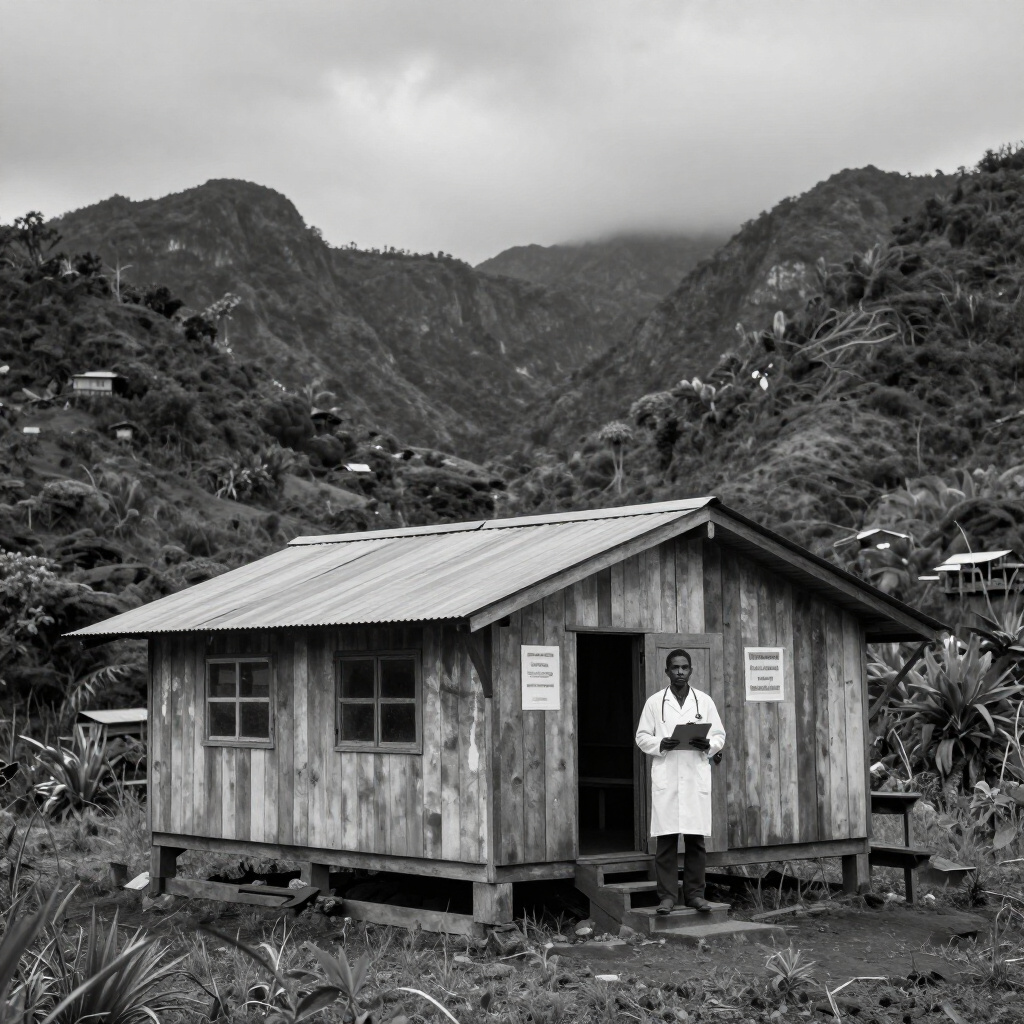
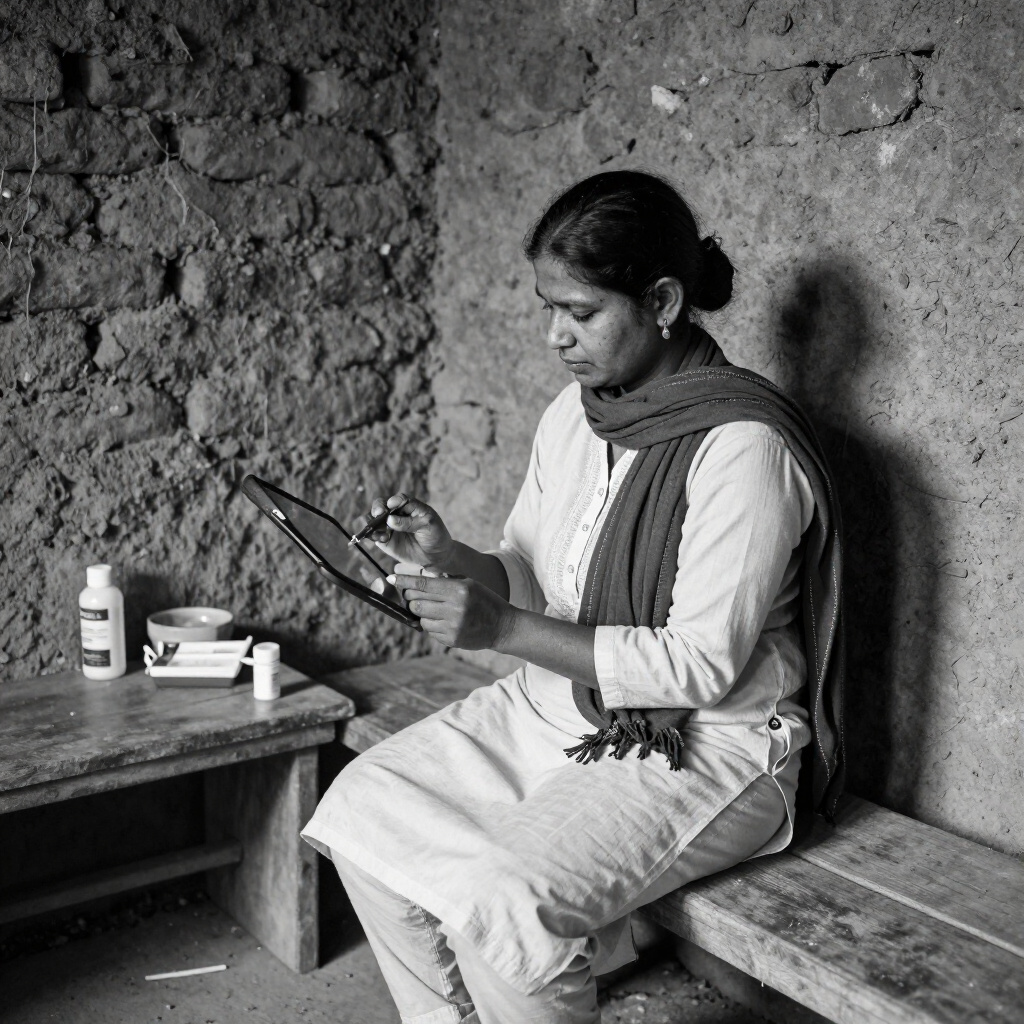
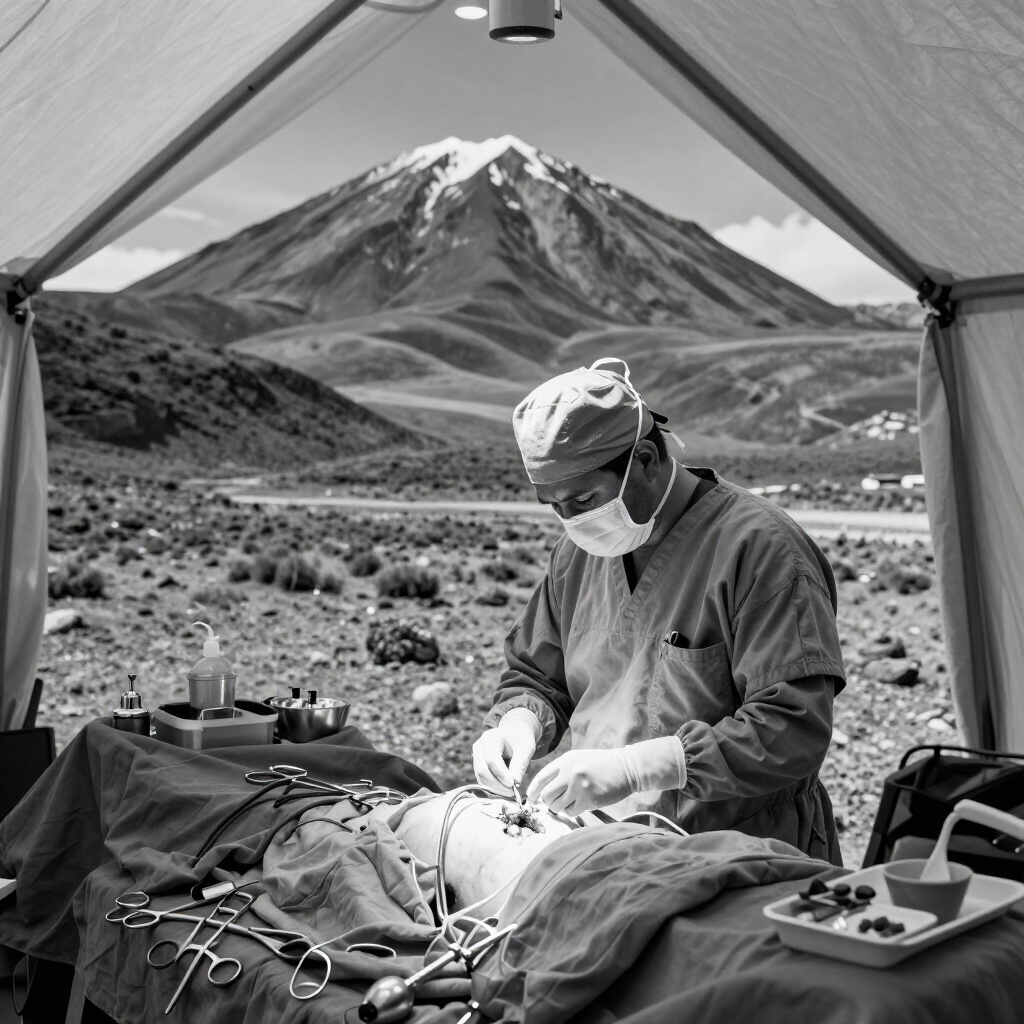
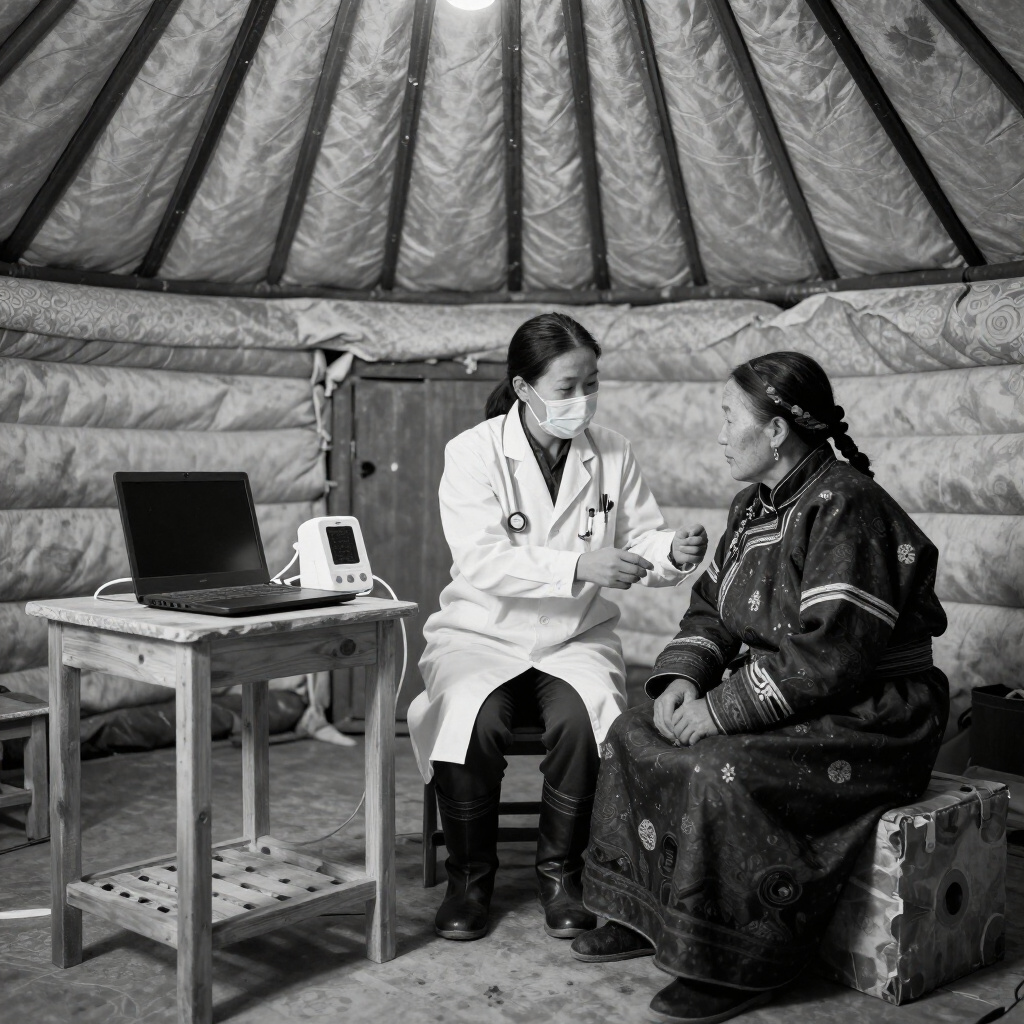
These regions are not barriers—they are proof points.
If the model works here, it works anywhere.
The Global Challenge
Why This Matters
Access to primary care remains one of the most significant global health challenges of our time. In remote and underserved regions, geography continues to determine outcomes. GEHW is focused on changing that reality by deploying a model that is not only effective—but scalable, sustainable, and globally adaptable.
Guiding Principle
“If care cannot reach the patient, the system has failed.”
Strategic Research & Field Documentation
Introduction to Research
This work began when a question stopped being philosophical—and became unavoidable:
If not me—then who?
and
If not now—then when?
At some point, the scale of global primary care inequity stops being abstract and becomes undeniable. Overwhelming--yet clarifying. Global Ethos HealthWorks (GEHW) is not a clinical intervention—it is a system architecture platform, structured through a disciplined two-part research approach. It defines how care is structured, governed, and delivered—independent of geography
The research is structured in two parts:
• Part I evaluates feasibility, legitimacy, and system compatibility across legal, cultural, and economic environments
• Part II tests clinical execution—validating safety, consistency, and scalability in real-world delivery
This is not theoretical work. It is the disciplined work required to ensure that when care reaches a community, it works. Because the quality of your care should never be determined by the geography of your birth.
ACTIVE RESEARCH PHASE: In Plannuing
Fuel the Strategy Behind Global Health Equity
Strategic funding and early-stage partnerships are the backbone of our evidence-building phase. Your investment accelerates the development of scalable diagnostic protocols and funds critical research pilots in remote regions of Mongolia, Nepal, and Papua New Guinea.

Bartow D. Daniel III is a healthcare executive, global operator, and founder of Global Ethos HealthWorks (GEHW)—a platform built on a simple but urgent belief:
Primary care should not be determined by geography.
Over the course of his career, Bart has led senior financial and operational roles across the United States, China, Southeast Asia, and Latin America, helping build and transform healthcare systems in both developed and emerging markets. As a Chief Financial Officer and executive leader, he has guided complex organizations through capital formation, operational redesign, and large-scale system development.But GEHW is not the result of a career—it is the result of a moment.In 2023, Bart suffered a life-altering stroke that forced him to step away from his professional responsibilities and confront a deeper question:
If not me, then who?
If not now, then when?
Having traveled to more than 70 countries and every continent except Antarctica, he had seen firsthand that access to care is not a function of need—but of location. Entire populations remain outside the reach of traditional healthcare systems.GEHW was built to change that.Drawing on the proven Alaska Community Health Aide Program (CHAP), Bart is leading the effort to scale a community-based, protocol-driven, and technology-enabled primary care model globally—one that is designed for the realities of remote, underserved, and infrastructure-limited environments.
This is not charity.
This is not theory.
This is sustainable.
GLOBAL PLATFORM DESIGN
Built to Scale From Day One
GEHW is intentionally structured to combine mission-driven impact with scalable financial and operational capacity.
This is not a traditional nonprofit. It is a platform designed for global deployment.
A Dual-Entity Model for Global Scale
Public Benefit Corporation (PBC)
Global Ethos HealthWorks operates through a hybrid structural approach. This platform architecture enables the mobilization of diverse strategic capital while maintaining absolute mission lock through nonprofit oversight. By separating operational infrastructure development from community-centric accountability, GEHW creates a sustainable framework for remote healthcare delivery that is built to endure.
Nonprofit (501c3)
Public Benefit Corporation
Nonprofit (501c3)
Integrated Platform
- • Strategic Capital Mobilization
- • Technology & Infrastructure IP
- • Scalable Operational Logistics
- • Enterprise Supply Integration
- • Community Advocacy & Trust
- • Health Worker Certification
- • Sovereign Ministry Partnerships
- • Applied Research Validation
- • Protocol Standardization
- • Hybrid Compliance Models
- • Long-term System Endurance
- • Scalable Delivery Networks
How the Model Scales
The distance between a refined model and global scale is bridged by this hybrid engine. It allows GEHW to act with the speed of a startup for engineering and infrastructure deployment, while maintaining the non-negotiable mission lock and sovereign-level trust of a public sector partner. Scaling occurs through the synchronization of high-access technology and high-trust community engagement.
Why This Structure Matters
Structural integrity determines deployment success. Linear healthcare interventions often fail to persist because their financial and operational engines are disconnected from their mission oversight. Our architecture ensures that clinical standard-setting remains central, while providing the agility required to navigate the world’s most complex healthcare frontiers.
This structure allows GEHW to operate at the intersection of philanthropy, policy, and scalable enterprise.
